...

Affichage des articles triés par pertinence pour la requête (useless french). Trier par date Afficher tous les articles

vendredi 7 août 2020

From Tychyna to Neborak


useless french

From Pavlo Tychyna to Viktor Neborak, a page of

The Princeton Handbook of 
World Poetries
Roland Greene & Stephen Cushman 
Princeton & Oxford, 2016, p. 564.

samedi 28 mars 2020

Vassyl Stous à Helsinki, le 17 octobre 2015

(useless french)


On 17 October, 2015, the literature and music event dedicated to the famous Ukrainian poet Vasyl Stus was organized by the Embassy of Ukraine in Finland, the Association of Ukrainians in Finland & the Association «Mova».


Guests of the event had the possibility to become more familiar with masterpieces of Vasyl Stus: poems in Ukrainian and translated into Russian, Finnish, English, German languages, and songs.

vendredi 28 août 2020

Mykola Bajan, Tranquilles araignées de l'âme clandestine

  useless french, indeed
En parlant de Juifs oukraïniens, des Juifs et des Oukraïniens, de antisémitisme traditionnel des Oukraïnines et tout ça. Va paraître dans les jours qui viennent "Quiet Spiders of the Hidden Soul".

Youry Yanovsky et Mykola Bajan
deux survivants de la Renaissance fusillée

On peut parler d’un miracle : Bajan, Sossioura, Rylsky, Zerov, le génial Tytchyna... peu de littératures européennes peuvent se vanter d’avoir fait surgir une telle pléiade de grands poètes en un laps de temps aussi bref.
Piotr Rawicz, 1981

“Quiet Spiders of the Hidden Soul”

Mykola (Nik) Bazhan’s Early Experimental Poetry


This bilingual Ukrainian-English collection brings together the most interesting experimental works by Mykola (Nik) Bazhan, one of the major Ukrainian poets of the twentieth century. As he moved from futurism to neoclassicism, symbolism to socialist realism, Bazhan consistently displayed a creative approach to theme, versification, and vocabulary. Many poems from his three remarkable early collections (1926, 1927, and 1929) remain unknown to readers, both in Ukraine and the West. Because Bazhan was later forced into the straitjacket of officially sanctioned socialist realism, his early poetry has been neglected. This collection makes these outstanding works available for the first time

Table of Contents


vendredi 20 mars 2020

An aquarium in the sea

(useless french)
Printemps des poètes 2020 [14]

An Aquarium in the Sea
The Story of New York Group of Poets
In the middle of ХХ century the Ukrainian cultural elite faced the problem of choice: to escape and save their national identity or assimilate and remain in the Soviet Union. The film tells the story of New York Group of Poets, founded in 1950. Ukrainian poets, who grew up in the English-speaking world, in the middle of XX century are trying to preserve their culture and grow it to the level of world culture. 

An Oleksandr Fraze-Frazenko film

dimanche 14 juillet 2019

Serhy Jadan, What We Live For, What We Die For

Serhiy Zhadan, What We Live For, What We Die For

 
The United States needs a Zhadan as much as Ukraine does.

Amelia Glaser, Los Angeles Review of Books

Paru en avril, aux Presses universitaires de Yale. Un choix dans l’œuvre poétique de Serhy Jadan depuis les "Ballades sur la guerre et la reconstruction", jusqu'aux recueils récents, "La vie de Marie", "Pourquoi je ne suis pas sur les réseaux sociaux".
 
Traductions en anglais de Virlana Tkacz et Wanda Phipps.


Useless french.

mardi 1 janvier 2019

Vassyl Stous objet de cinéma

Useless french

"L'Interdit", 2019, n'est pas le premier biopic consacré à Vassyl Stous, mais c'est le premier long métrage, et comme il est désormais disponible sur YouTube, chacun pourra juger par lui-même.


Film étrillé à sa sortie dans Geek Journal par l'indispensable Tayler Andersen :

dimanche 19 janvier 2020

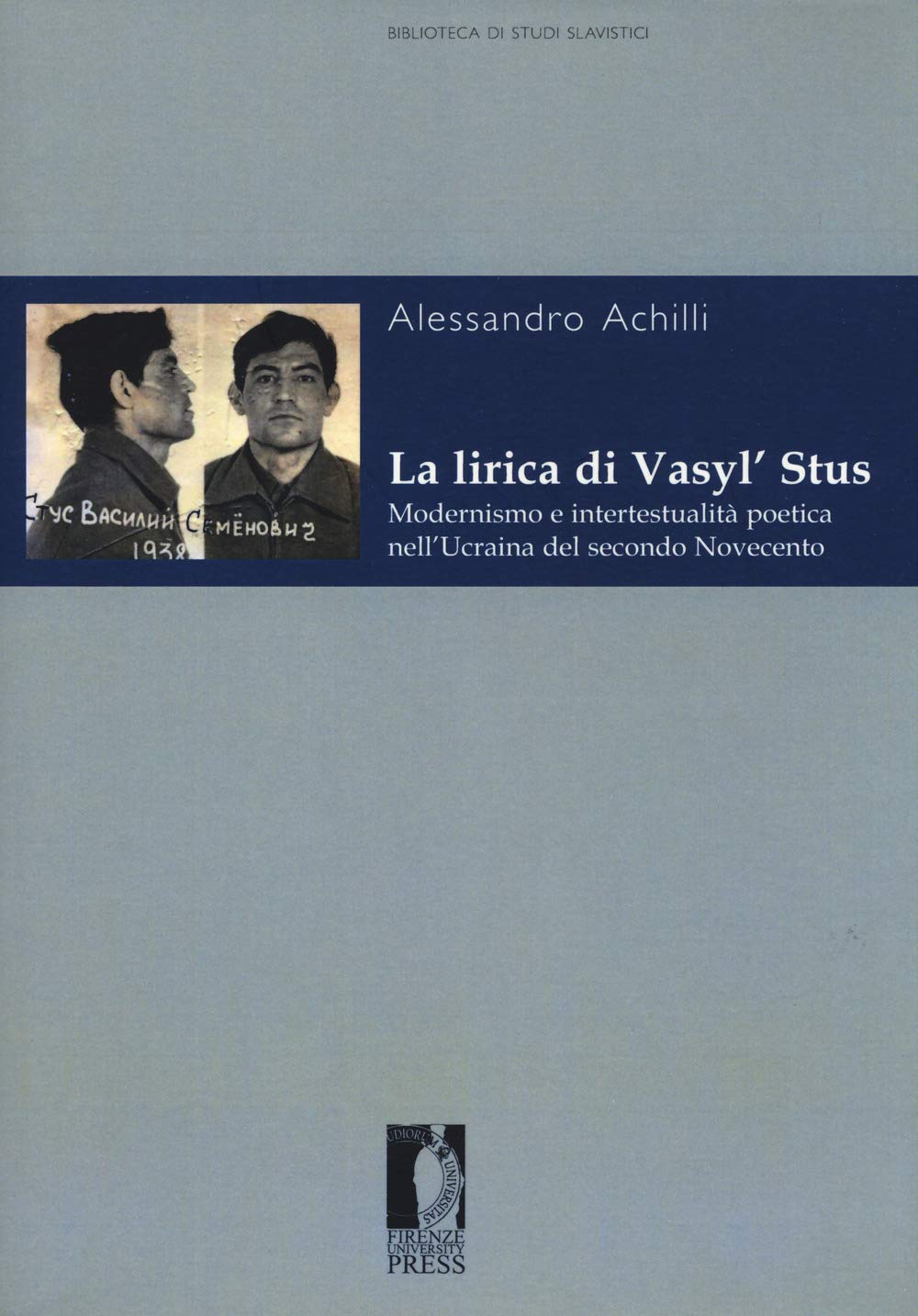
La lirica di Vasyl' Stus, 2019 (useless french)

Alessandro Achilli

La lirica di Vasyl' Stus

Modernismo e intertestualità poetica nell'Ucraina del secondo Novecento


Come ha scritto di recente Marko Pavlyshyn, uno dei pochi critici a essersi occupato dell’opera stusiana al di fuori dell’Ucraina, “how Stus might be viewed relative to Rilke or Pasternak was of less interest than what he could teach the inhabitants of post-Soviet Ukraine through the example of his life”. Questo studio cercherà di colmare almeno in parte la lacuna correttamente e provocatoriamente evidenziata da Pavlyshyn 
(Introduzione)


This book explores the poetry of Vasyl’ Stus (1938-1985), a major Ukrainian writer and intellectual of the second half of the 20th century. The volume aims to present the evolution of Stus’ poetic oeuvre from his beginnings in the late 1950s up to his mature poetry of the 1970s.

jeudi 12 mars 2020

Poetry against the System : Vasyl Stus

(useless french)

Poetry Against the System: Vasyl Stus

Ukrainian Institute London

79 Holland Park, London, W11, United Kingdom

Date and Time

Thu, 12 March 2020
19:00 – 20:30 GMT

vendredi 24 janvier 2020

Vassyl Stous, traductions espagnoles

Vasyl Stus 
 (1938-1985)

Traducción de Iury Lech

¡Cómo se desea -morir!...

¡Cómo se desea —morir!
Para no callar,
ni con el grito clamar,
el último astro,
la venteada madrugada.
Póstumo detenerse
del glaseado día;
aguardar —y morir.
Y desde entonces no pensar en el regreso:
en lo profundo del silencio
en donde la quietud adormece,
en donde la melodía oprime
al corazón esclavizado:
ni siquiera es posible respirar—
¡cómo se desea morir!
Se desvanecieron los sueños,
las ideas se tornaron inservibles,
todos los gozos —cayeron abatidos
todos los colores —se desvanecieron.
Insaciable, como el claro umbroso en un bosque,
es la trayectoria vertical.
Pero no se podrá escalarla
ni a pie, ni con la vista,
ni con el movimiento, ni con el espíritu,
ni con el cuerpo desmembrado,
ni con la garganta atenazada.
Así que imploro, Señor,
deja que me eleve,
porque la muerte es lo que deseo.
Cómo es posible continuar;
esta espera opresora,
el abismo sin fondo,
esta cima dolorosa,
el feroz tormento.
¡Permíteme que caiga en un sueño eterno!
¡Extraviarse, olvidar,
descender hacia el grito,
desintegrarse en fragmentos,
ser esparcido al viento,
perderse en el tiempo
y, arrancándome el alma,
naufragar en el anonimato!
Al otro lado de la colina del destino
una tormenta de nieve aplaca la furia,
y las manos maternas
—teñidas de amanecer—
alzadas hacia el cielo
buscan a tientas
al espectro primogénito
prisionero para unos ojos abstraídos,
unas espaldas inclinadas por la resignación.
¡Cómo se desea —morir!
Desplazarse imperceptiblemente,
más allá de la orilla ilusoria,
más allá del horizonte de lo posible,
más allá del muro de las humillaciones,
más allá de las rejas enloquecedoras,
allende el helor —de la clausura.